Beskrivelse
EPPC090/NMRV063 Helical-Worm Combined Reducer
The EPPC090/NMRV063 pairs the larger 90 mm helical pre-stage with a 63 mm NMRV worm main stage, delivering 225 Nm rated output torque at an elevated 3.0 kW pre-stage input-power capacity. This configuration targets bulk-handling conveyor drives at Australian terminal operations, demanding duty-cycle reducers at mining circuit feed stations, and continuous-duty packaging equipment where the larger pre-stage provides significant thermal headroom. The 17.9 kg aluminium-housed assembly delivers the torque envelope of heavier cast-iron alternatives at approximately one-third the weight.
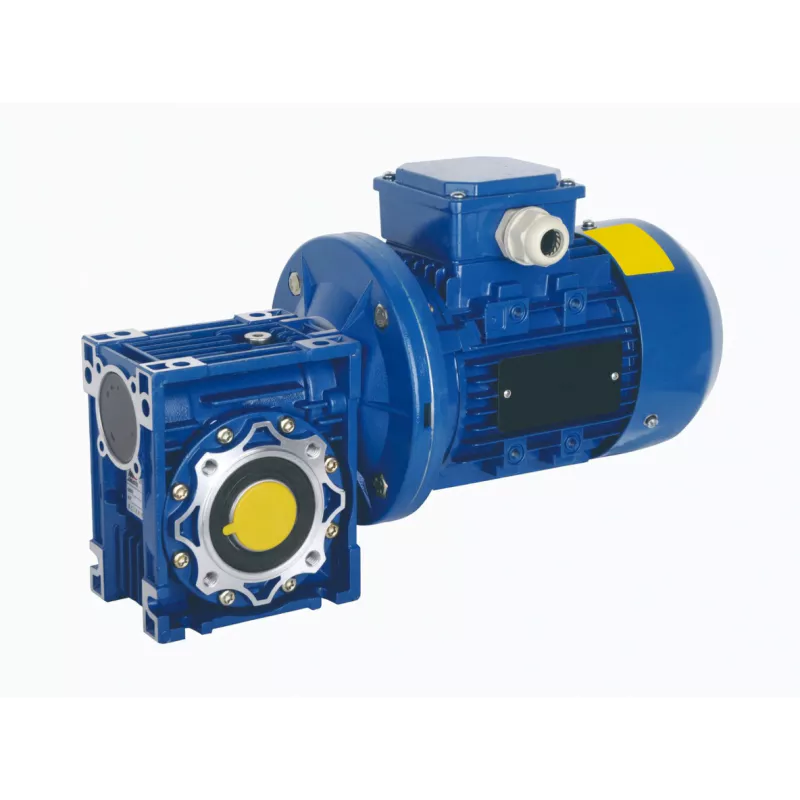
EPPC090/NMRV063 Specifications
Full technical data for the EPPC090/NMRV063 helical-worm combined reducer. Values are verified at end-of-line dynamometer test and retained on serial-number record for five years. Non-standard shaft modifications, food-grade lubricant fills, and mounting-position variations are available on request through our engineering desk.
| Specification | Value |
|---|---|
| Model designation | EPPC090/NMRV063 |
| Configuration | Helical-worm combined reducer (helical pre-stage + NMRV worm main stage) |
| Pre-stage type | PC090 helical gear pre-stage (approximately 96 percent efficient) |
| Main stage type | NMRV063 worm reducer main stage |
| Centre distance | 90 + 63 mm |
| Rated output torque | 225 Nm |
| Combined ratio range | 10:1 to 700:1 |
| Combined mechanical efficiency | approximately 80 percent |
| Output shaft speed (4-pole 1,400 rpm input) | 2.0 – 140 rpm |
| Pre-stage input power (max) | 3.0 kW |
| Output bore (hollow shaft) | 25 mm |
| Output shaft diameter (solid shaft) | 25 mm |
| Output radial load capacity | 3250 N |
| Motor flange – NEMA | 140TC / 180TC |
| Motor flange – IEC | B5 |
| Housing material | ADC12 die-cast aluminium alloy (both stages) |
| Helical gear material | 20CrMnTi case-hardened alloy steel, ground |
| Worm shaft material | 20CrMnTi case-hardened alloy steel, ground ISO grade 6 |
| Worm wheel material | CuSn12 tin-bronze centrifugal casting |
| Lubricant | Synthetic PAG ISO VG 320 (factory fill, shared chamber) |
| Shaft seals | Viton (FKM) double-lip seals |
| Ingress protection | IP55 (labyrinth upgrade available) |
| Mounting positions | B3, B6, B7, B8, V5, V6 |
| Assembled weight | 17.9 kg |
Engineering Features of the EPPC090/NMRV063
Six core design characteristics that distinguish the helical-worm combined EPPC090/NMRV063 from alternative two-stage worm reducer constructions. Each feature below is grounded in an operational constraint that Australian OEM specifiers raise during technical qualification.
IP55 Ingress Protection
Both stages carry IP55 ingress-protection rating as standard. Labyrinth-seal output-shaft upgrade is available for dust-intensive service in mining and grain-handling applications. Marine-grade paint is specified as standard on units destined for coastal bulk-terminal installations.
IEC and NEMA Motor Flanges
The helical pre-stage motor interface accepts IEC B5 or B14 flange-mount motors as well as NEMA 56C, 140TC, 180TC, and 210TC flange-mount motors depending on the pre-stage frame size. Dual-standard compatibility simplifies motor sourcing across Australian and international customer bases.
Six Mounting Orientations
Factory-supported mounting positions B3, B6, B7, B8, V5 and V6. Declared mounting orientation at order stage sets the factory oil-fill volume calibration. Vertical mounts receive additional oil volume to ensure both the helical pre-stage and worm main-stage engagement surfaces remain properly submerged.
100% End-of-Line Dynamometer Testing
Every combined unit is tested on a closed-loop dynamometer across the catalogue torque range before shipment. Noise measurement in a semi-anechoic booth, sump-temperature rise monitored during run-in, and combined efficiency verified against catalogue specification. Test record is retained per serial number for five years.
Helical Pre-Stage Efficiency
Case-hardened helical gear set in the pre-stage delivers approximately 96 percent stage efficiency, substantially higher than the 75 to 85 percent typical of a worm pre-stage. Combined with the NMRV main stage, the full drive train achieves 78 to 80 percent mechanical efficiency against 50 to 70 percent for a two-stage worm equivalent.
Higher Input Power Density
The helical pre-stage accepts higher motor input power than a comparable worm pre-stage at the same envelope size, enabling 0.55 to 7.5 kW input across the frame range. This allows a compact combined unit to drive applications that would otherwise require a substantially larger two-stage worm reducer.
Typical EPPC090/NMRV063 Applications Across Australia
The EPPC090/NMRV063 is specified across five primary Australian industry sectors. The descriptions below reflect real installations where the helical pre-stage efficiency advantage over a two-stage worm configuration provides measurable operating-cost benefit or thermal-envelope relief.

Mining & Minerals Processing
In mining and minerals-processing service, the EPPC090/NMRV063 drives ore-sample screw feeders, slow-speed cone-crusher auxiliary reducers and tailings-pond skimmer drives at Pilbara, Kalgoorlie and central Queensland operations. The helical pre-stage provides improved impact-load tolerance compared to worm-only pre-stages – relevant on screen-drive and feeder applications where intermittent shock loading is normal. Labyrinth-seal output upgrade and marine-grade paint are both specified as standard on units destined for tropical-coastal bulk-terminal installations.

Material Handling & Logistics
For material handling and logistics duty, the EPPC090/NMRV063 is specified into continuous-duty roller-conveyor drives, pallet-transfer indexing units and bulk-terminal belt-tensioning reducers at Australian DC operations. The helical pre-stage delivers approximately 80 percent combined mechanical efficiency, substantially higher than the 50 to 70 percent typical of two-stage worm arrangements. At continuous operation this translates to meaningful electrical-energy savings and reduced heat load inside enclosed conveyor cabinets – particularly relevant on 24/7 three-shift Sydney and Melbourne distribution centres.

Food & Beverage Processing
In food and beverage processing applications, the EPPC090/NMRV063 powers bottling-line spindle drives, palletiser-cell indexing reducers and CIP-tolerant processing conveyors at Australian dairies, craft breweries and meat processors. The higher combined efficiency of the helical pre-stage compared to a two-stage worm configuration matters here because these lines run continuously for long campaigns. Food-grade H1 synthetic lubricant fill is available as a factory option, with stainless fasteners and washdown-tolerant paint on request.
Environmental & Water Treatment
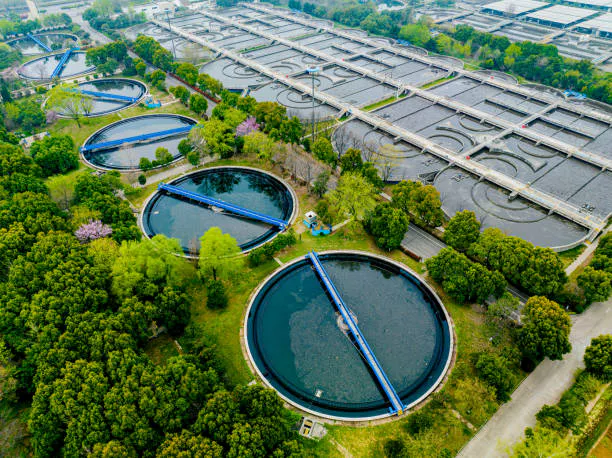
For environmental and water-treatment service, the EPPC090/NMRV063 drives screw-conveyor sludge transport, slow-speed grit-classifier augers and DAF skimmer reducers at municipal and private industrial plants across regional Australia. The IP55 housing and viton lip-seal package handle the corrosive splash environment of chlorination and caustic-dosing zones. The helical pre-stage maintains efficient torque transmission across a wide input-rpm range, enabling VFD-driven variable-speed duty with stable output torque across the operating envelope.

Agriculture & Primary Production
For agricultural and primary-production applications, the EPPC090/NMRV063 is deployed on poultry-house feed-conveyor drives, grain-handling screw-conveyor reducers and irrigation-pump clutch drives on NSW, Victorian and Queensland rural operations. The helical pre-stage efficiency advantage over two-stage worm construction becomes significant where the reducer operates continuously for long periods – electrical consumption on a dairy-shed 24-hour feed line adds up, and the thermal envelope of the aluminium housing handles Queensland summer ambient without active cooling.
How to Specify the EPPC090/NMRV063 Correctly
A helical-worm combined reducer is specified when input power, continuous-duty operation, or cabinet-thermal behaviour make the efficiency advantage over a two-stage worm equivalent operationally significant. Three checks matter: required output torque, required combined ratio, and actual continuous motor-input power at the operating point. Our engineering desk verifies all three against the customer duty profile before issuing a sizing recommendation.
1. Confirm Output Torque
Required torque at the output must fall within the 225 Nm rating of the EPPC090/NMRV063. Apply an appropriate service factor (1.0 uniform / 1.25 moderate shock / 1.5 heavy shock) on the nominal load torque.
2. Set Combined Ratio
Required output rpm at the driven load determines the combined ratio. Available combined ratios span 10:1 to 700:1 through different pre-stage and main-stage ratio pairings. Specify target output rpm for a ratio match.
3. Confirm Motor Power
Pre-stage input-power capacity is 3.0 kW maximum. Helical pre-stage efficiency (approximately 96 percent) allows smaller motor sizing than a two-stage worm equivalent for the same driven-load torque.
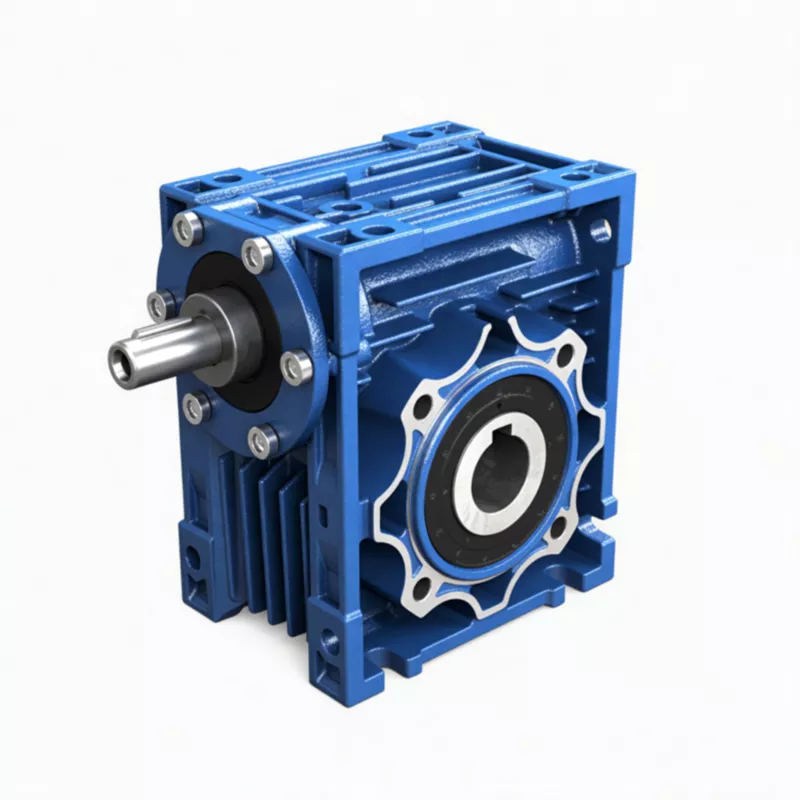
EPPC090/NMRV063 Technical Questions
The most common technical questions our engineering desk receives on the EPPC090/NMRV063 from Australian OEM design engineers, plant maintenance leads, and specification consultants. Additional questions are welcome by email to our engineering team.
What certifications does the EPPC090/NMRV063 carry?
Our quality management system is ISO 9001:2015 certified. The EPPC090/NMRV063 carries CE conformity for export markets, RoHS material compliance, and IP55 ingress-protection testing. Certificates of conformity are issued with every shipment and individual-serial-number test records are retained at the factory for five years. Application-specific certifications such as ATEX are available on a project-configured basis.
Are custom shaft modifications available?
Custom output-shaft lengths, non-standard keyways, double-extended output shafts for dual-drive arrangements, and shaft-end protective covers are all available on the main-stage output. Minimum-quantity requirements apply for non-catalogue shaft variants. Drawing-level specification is exchanged with our engineering desk during the quotation stage.
Can you supply food-grade or washdown-tolerant variants?
USDA H1-rated synthetic lubricant factory fill, stainless-steel fastener upgrade, and washdown-tolerant paint systems for daily caustic CIP exposure are all available on request. Specify the requirement at quotation so the factory can configure the correct lubricant, seal elastomer compatibility, and surface finish across both the helical pre-stage and NMRV main stage housings.
What combined efficiency does the EPPC090/NMRV063 achieve?
Combined mechanical efficiency of the EPPC090/NMRV063 is approximately 80 percent across the normal operating range, the product of the helical pre-stage (approximately 96 percent) and the NMRV worm main stage (78 to 85 percent depending on the main ratio). This is substantially higher than the 50 to 70 percent typical of two-stage worm arrangements, translating to measurable motor-electrical consumption savings on continuous-duty applications.
When would I choose the EPPC090/NMRV063 over a two-stage worm reducer?
Specify the EPPC090/NMRV063 when: input power is above 0.5 kW and electrical consumption matters, continuous-duty operation is the norm (conveyors, processing lines), impact loading or frequent starts stress the drive train, or thermal headroom in enclosed cabinet installations is constrained. Choose a two-stage worm when very high combined ratios above 700:1 are required, since the helical pre-stage cannot reach the ultra-high ratios of a two-stage worm configuration.
Is the output self-locking on the EPPC090/NMRV063?
The worm main stage retains the self-locking output characteristic typical of high-reduction worm gearing. For most combined ratios above about 50:1 the output is self-locking under static load. The helical pre-stage on its own would not self-lock, but the downstream worm stage provides this characteristic for the combined unit. The static self-locking condition should not substitute a mechanical brake where a brake is a safety requirement.
What Engineers Say About the EPPC090/NMRV063
Verified customer feedback from Australian and international engineering customers. Names and companies are published with permission. Review text is paraphrased where necessary to protect commercial-in-confidence project detail.
The EPPC090/NMRV063 powers our new bottling-line spindle reducer after a capacity-expansion project. VFD-driven operation across a wide input-rpm range is the norm on our plant. The helical pre-stage handles the variable-frequency input cleanly, and the output-torque characteristic remains stable across the operating envelope. Installation-to-commissioning was straightforward using our existing IEC motor stock.
Specified the EPPC090/NMRV063 into our slow-indexing assembly-line rotary-table drives. The combined helical-worm construction delivered the self-locking output characteristic required at the application with a more compact envelope than our previous two-separate-reducer arrangement. Technical documentation supports our mechanical-engineering change-control process.
Running multiple EPPC090/NMRV063 units at our processing-line facility. The helical pre-stage efficiency advantage against two-stage worm alternatives has been validated against plant electrical consumption over the first operating year. Reliability through the Indian monsoon-season ambient has been consistent.
The EPPC090/NMRV063 supports our slow-speed processing-line conveyor drives for regional food-manufacturing customer markets. Input-power capacity at the helical pre-stage allowed a more compact mechanical envelope than the two-stage worm alternatives we evaluated. Documentation supports our export-market CE conformity compilation.
Integrated the EPPC090/NMRV063 into circulation-drive units for our fish-farm agitator product line. Corrosion resistance of the aluminium-housed construction handles the marine salt-air environment well. Helical pre-stage impact-load tolerance matters on circulation-drive start-up where water inertia loads the system momentarily.
Related Helical-Worm Combined Configurations
Three related helical-worm combined reducers across different torque and input-power envelopes. If the EPPC090/NMRV063 is close but not exactly matched to your duty requirement, one of the alternatives below may deliver a better specification fit.
Browse the full helical-worm combined range or compare with the combined two-stage worm alternatives.
Ready to Specify the EPPC090/NMRV063?
Send your duty-cycle parameters to our Australian engineering desk for a sized recommendation, compatible motor options and a firm quotation. Technical enquiries are handled by the engineer responsible for the product, not a generic sales desk.