Description
Riduttore a vite senza fine combinato a due stadi EPNMRV030/063
The EPNMRV030/063 is our entry-level combined two-stage worm gearbox, factory-paired from a 30 mm centre-distance pre-stage and a 63 mm centre-distance main stage. Combined ratios from 100:1 through 8,000:1 deliver output speeds as low as 0.175 rpm directly from a standard four-pole input motor, making this frame the go-to choice for small agitator drives, secondary solar-tracker azimuth reducers and slow-sweep packaging accumulators. Rated output torque of 225 Nm and a compact 7.3 kg aluminium envelope give Australian OEM integrators a very-low-speed reducer without the bulk of a larger frame.
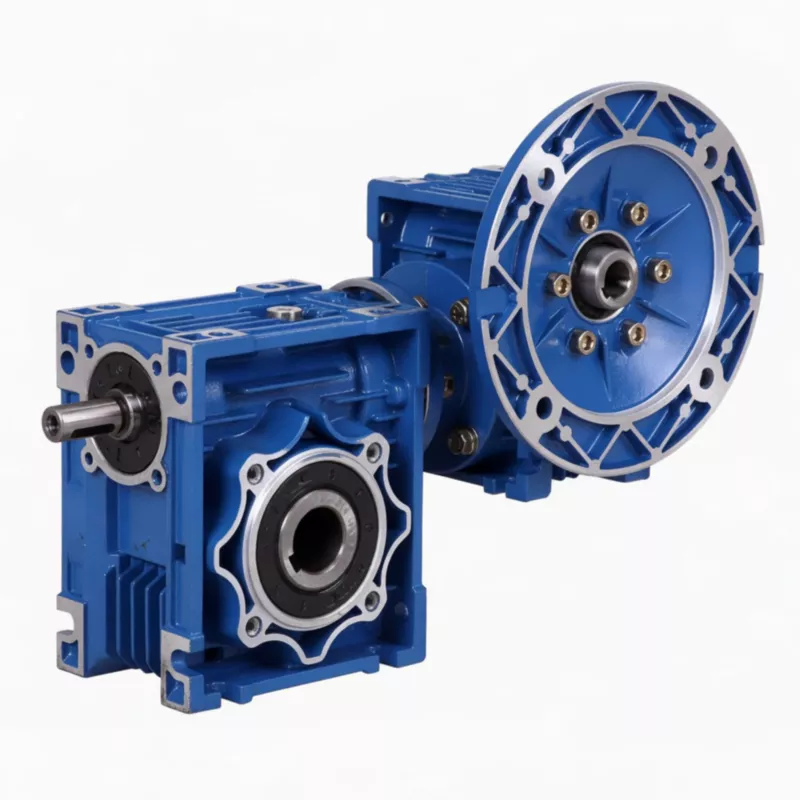
EPNMRV030/063 Specifications
Full technical data for the EPNMRV030/063 combined two-stage worm gearbox. Verified at end-of-line test and retained on serial-number record for five years. Values represent the rated envelope for catalogue-standard configurations – non-standard shaft modifications and mounting variations are available on request through our engineering desk.
| Specification | Value |
|---|---|
| Model designation | EPNMRV030/063 |
| Configuration | Combined two-stage worm reducer (pre-stage + main stage, factory-paired) |
| Distanza dal centro | 30 + 63 mm |
| Rated output torque | 225 Nm |
| Combined ratio range | 100:1 to 8000:1 |
| Output shaft speed (4-pole 1,400 rpm input) | 0.175 – 14.0 rpm |
| Pre-stage input power (max) | 0.37 kW |
| Output bore (hollow shaft) | 25 mm |
| Output shaft diameter (solid shaft) | 25 mm |
| Output radial load capacity | 3250 N |
| Motor flange – NEMA | 56C / 140TC |
| Motor flange – IEC | B5 / B14 (pre-stage) |
| Housing material | ADC12 die-cast aluminium alloy |
| Worm shaft material | 20CrMnTi case-hardened alloy steel, ground ISO-grade 6 |
| Worm wheel material | CuSn12 tin-bronze centrifugal casting |
| Lubricant | Synthetic PAG ISO VG 320 (factory fill) |
| Shaft seals | Viton (FKM) double-lip seals |
| Ingress protection | IP55 (labyrinth upgrade available) |
| Mounting positions | B3, B6, B7, B8, V5, V6 |
| Assembled weight | 7.3 kg |
Engineering Features of the EPNMRV030/063
Six core design decisions that distinguish the EPNMRV030/063 from generic imported two-stage reducers. Every feature below is traceable to a real Australian operating constraint rather than a marketing abstraction.
ADC12 Aluminium Housing
Die-cast ADC12 aluminium alloy housing delivers thermal conductivity three to four times higher than cast iron, maintaining stable oil-sump temperature under sustained two-stage operation. Salt-air corrosion resistance without active paint maintenance suits coastal NSW and Queensland installations.
Combined Ratio Up to 10,000:1
Factory-paired pre-stage and main-stage worm sets deliver combined ratios from 100:1 through 10,000:1 depending on frame, reaching output speeds below 0.2 rpm directly from a four-pole motor without a chain-reduction driveline stage.
Compact Stacked Envelope
Integrated flange mounting between pre-stage and main stage eliminates the coupling and guard required by externally-mounted two-stage arrangements. Total mounting envelope stays within the footprint of a single large-frame unit for most pairings.
Factory-Matched Worm Sets
Both the pre-stage and main-stage worm-and-wheel pairs are factory-matched and lapped at the production line. Engagement geometry is verified for each serial number before assembly. Replacement sets are supplied as matched pairs for predictable run-in.
Synthetic PAG Lubrication
Factory fill with ISO VG 320 synthetic polyalkylene glycol maintains film viscosity from -20 °C cold starts through +90 °C sustained sump temperature. Superior film retention under low-rpm output-stage conditions where mineral-oil alternatives can drop out and accelerate wheel wear.
Viton Double-Lip Shaft Seals
Viton (FKM) double-lip seals at both the input shaft of the pre-stage and the output shaft of the main stage. Temperature rating to 200 °C continuous. Nitrile alternatives would harden and crack at Australian summer ambient inside enclosed packaging cabinets.
Typical EPNMRV030/063 Applications Across Australia
The EPNMRV030/063 is specified into five primary Australian industry sectors. The descriptions below reflect real deployments rather than catalogue theory, drawn from field installations where output shaft speeds below 14 rpm are required continuously.

Agriculture & Primary Production
For agricultural and primary-production applications, the EPNMRV030/063 drives livestock feeding augers, dairy-shed sweep-arm reducers and solar-tracker azimuth drives on NT, Queensland and WA rural holdings. The aluminium housing dissipates heat effectively in 45 °C ambient on exposed cattle-station feed-pad installations, and the combined ratio range supports the ultra-low output speeds required for solar-panel tracking motion across a daylight cycle. Synthetic PAG lubricant maintains film integrity through the diurnal thermal swing.
Mining & Minerals Processing
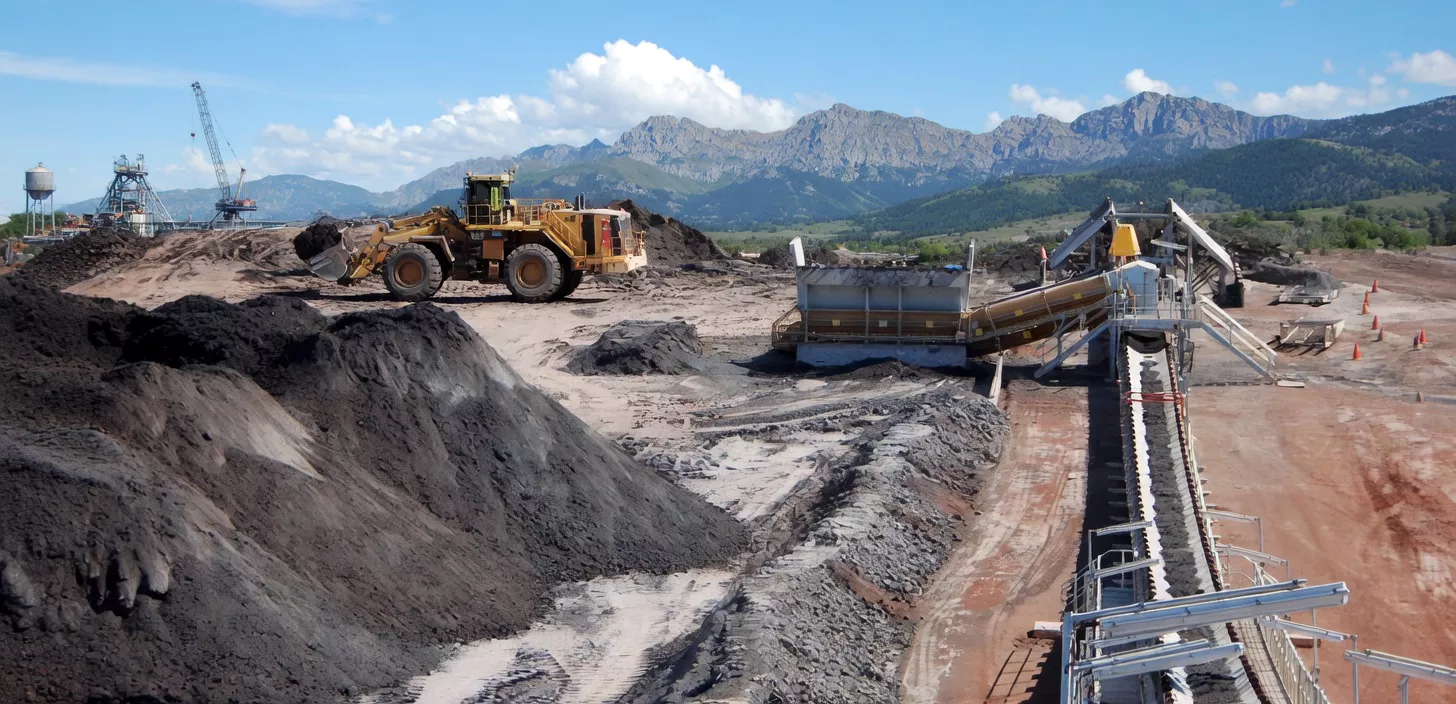
In mining and minerals-processing service, the EPNMRV030/063 powers tailings-thickener rake drives, sample-preparation ball-mill auxiliary reducers and conveyor tensioning drives at Pilbara iron-ore and Kalgoorlie gold operations. The labyrinth-seal output-shaft upgrade is recommended for red-dust Pilbara conditions, and marine-grade paint is specified for coastal bulk-terminal installations. Rated output torque of 225 Nm with the combined-ratio range covering 100:1 to 10,000:1 addresses the ultra-low-speed rake and thickener drives typical of Australian tailings dams.
Material Handling & Logistics
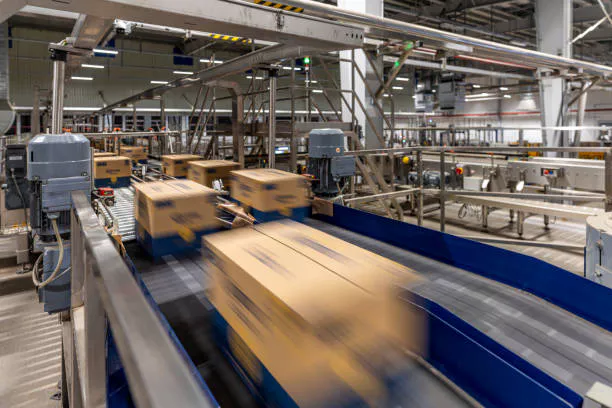
In material handling and logistics service, the EPNMRV030/063 drives pallet-transfer accumulators, slow-indexing crate conveyors and bulk-terminal bucket-elevator auxiliary drives where output shaft speeds below 3 rpm are required. The combined two-stage construction reaches these low speeds directly from a standard four-pole motor input without requiring a chain reduction in the driveline, eliminating a wear component common on Australian packaging-hall conveyors. Typical deployments are seen at Western Sydney and Melbourne distribution centres running 24/7 three-shift operations.

Food & Beverage Processing
For food and beverage processing duty, the EPNMRV030/063 powers spiral-freezer tensioners, CIP-tolerant agitator reducers and slow-index bottling-line accumulators at Australian dairies and craft breweries. The aluminium-housed body handles repeated caustic washdown exposure without corrosion bloom, and factory-fill with food-grade H1 synthetic lubricant is available on request. Output speeds below 1 rpm are commonly specified for mixer and blender reducers where batch homogenisation time must be precisely controlled across multi-hour production cycles.
Environmental & Water Treatment
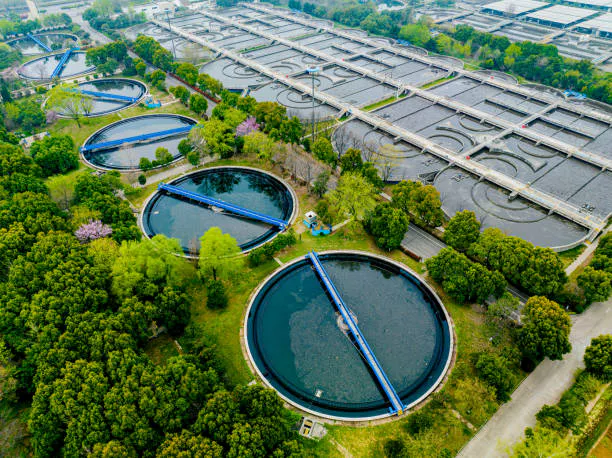
In environmental and water-treatment service, the EPNMRV030/063 drives clarifier centre-rake reducers, flocculator agitators and sludge-dewatering belt-press slow drives at municipal and private plants across regional NSW, Victoria and Queensland. The viton lip-seal package handles chlorinated and caustic splash common around chemical-dosing skids, and the IP55 housing tolerates outdoor open-tank installation through Australian wet-season conditions. Output torque of 225 Nm is well matched to typical rake-drive and thickener duty cycles.
How to Specify the EPNMRV030/063 Correctly
A combined two-stage worm gearbox is specified when output rpm requirements fall below the practical range of a single-stage NMRV reducer. Three checks matter most: required output torque, required output speed (which sets the combined ratio), and the duty service factor. Our engineering desk verifies all three from customer-supplied duty data before issuing a recommendation.
1. Confirm Output Torque
Target output torque must be within the 225 Nm rating of the EPNMRV030/063. Apply an appropriate service factor for the duty class (1.0 uniform / 1.25 moderate shock / 1.5 heavy shock) on top of the nominal load torque.
2. Set Combined Ratio
Required output rpm at the driven load determines the combined ratio selection. Combined ratios available range from 100:1 to 8000:1 through different pre-stage and main-stage ratio pairings. Specify target output rpm to our engineering desk for a ratio match.
3. Check Motor Power
Pre-stage motor input capacity is 0.37 kW maximum. Actual motor selection is driven by the operating output torque and rpm, not the catalogue maximum. Our sizing worksheet confirms motor-reducer compatibility.
EPNMRV030/063 Technical Questions
The most common questions our engineering desk receives on the EPNMRV030/063 from Australian specifiers, OEM design engineers, and maintenance planning teams. Additional questions are welcome by email to our technical team.
What output speed range is available on the EPNMRV030/063?
Combined ratios across this frame cover 100:1 through 8000:1 depending on the pre-stage and main-stage ratio combination selected. From a four-pole 1,400 rpm input, output speeds range from approximately 14 rpm on the lowest combined ratio down to 0.14 to 0.175 rpm on the highest combined ratio. Exact output speed for a specified combined ratio is given on request with the sizing worksheet.
Can the pre-stage and main-stage be serviced independently?
The pre-stage and main-stage are factory-paired as a matched assembly and share a common oil chamber across the interconnecting flange. Field servicing replaces the full combined assembly rather than individual stages. This approach preserves the warranty envelope and guarantees the run-in engagement quality between the two stages.
What motor power is typically specified for the EPNMRV030/063?
The pre-stage motor input capacity is 0.37 kW maximum for this frame. Typical Australian OEM applications pair this combined reducer with a 0.25 to 0.37 kW four-pole three-phase motor, sized according to the actual duty torque and operating speed rather than the combined-reducer catalogue maximum. Our engineering desk will verify motor sizing against your duty profile.
Qual è la durata di servizio prevista in funzionamento continuativo?
Under rated output torque and appropriate synthetic oil fill, expect 20,000 to 30,000 service hours before worm-wheel wear becomes noticeable as backlash drift in the main-stage output. Very low-speed applications tend to show longer life since the surface velocity at the worm engagement is reduced compared to single-stage operation.
Are custom output shaft extensions available?
Custom shaft lengths, non-standard keyways (including metric 8×7 keyways on inch-dimensioned shafts), double-extended output shafts for dual-drive arrangements, and shaft-end protective covers are all available on the main-stage output. Minimum order quantities apply for non-catalogue shaft variants. Drawing-level specification is exchanged with our engineering desk during the quotation stage.
How does the combined efficiency compare to a single-stage reducer?
Mechanical efficiency for a two-stage worm arrangement is the product of the two stage efficiencies. For typical NMRV combinations this gives a combined mechanical efficiency in the 50 to 70 percent range, lower than a single-stage worm reducer. This is the expected trade-off for reaching the very high reduction ratios that a single-stage configuration cannot deliver practically.
What Engineers Say About the EPNMRV030/063
Verified customer feedback from Australian and international engineering customers. Names and companies are published with permission. Review text is paraphrased to protect commercial-in-confidence project detail where necessary.
Installed four EPNMRV030/063 units on our CIP-tolerant blender sweep arms during last year’s seasonal shutdown. The caustic washdown exposure is brutal on gearboxes and the previous European-supplier units were leaking within nine months. The aluminium housing on the EPNMRV030/063 is holding up well so far and the torque margin at the combined ratio we specified is noticeably more conservative than the competitor spec.
We source the EPNMRV030/063 for our slow-speed mixer-reducer product line. Australian-based engineering support across the trans-Tasman time zone has been consistently responsive. Product build quality on sample inspection aligned with the datasheet claims, which is not always the case with equivalent import-catalogue units.
Integrated EPNMRV030/063 reducers into a tracking-cycle automation system. The combined-ratio flexibility and compact envelope suited our mechanical design constraints. Documentation and traceability were comprehensive which helped our QA sign-off process.
The EPNMRV030/063 supports our slow-speed bottle-accumulator conveyor requirement with a cleaner mechanical envelope than a single-stage plus chain reduction arrangement. Mechanical interchangeability with European-standard mounting patterns makes component substitution straightforward for international deployments.
Evaluated the EPNMRV030/063 for introduction to our catalogue. Mechanical build tolerances on our inspection were in line with Japanese industrial expectations. The combined two-stage envelope is more compact than equivalent offerings from larger European suppliers we have worked with previously.
Related Combined Two-Stage Configurations
Three related combined two-stage gearboxes across different torque and ratio envelopes. If the EPNMRV030/063 is close but not exactly matched to your duty requirement, one of the alternatives below may be the better fit.
Browse the full combined two-stage range or return to the Pagina iniziale di Ever-power Australia Gearbox.
Ready to Specify the EPNMRV030/063?
Send your duty-cycle parameters to our Australian engineering desk and receive a sized recommendation, compatible motor options, and a firm quotation. Technical enquiries are handled by the engineer responsible for the product, not a generic sales desk.